Perspectives in Aseptic Manufacturing: Establishing a Container Closure System - Engineering for Integrity
A container closure system(CCS) is an engineered solution to protect drug product. It must maintain sterility, support container closure integrity, and perform consistently within automated fill/finish operations. A comprehensive CCS strategy integrates materials science, equipment compatibility, contamination control, and scalability.
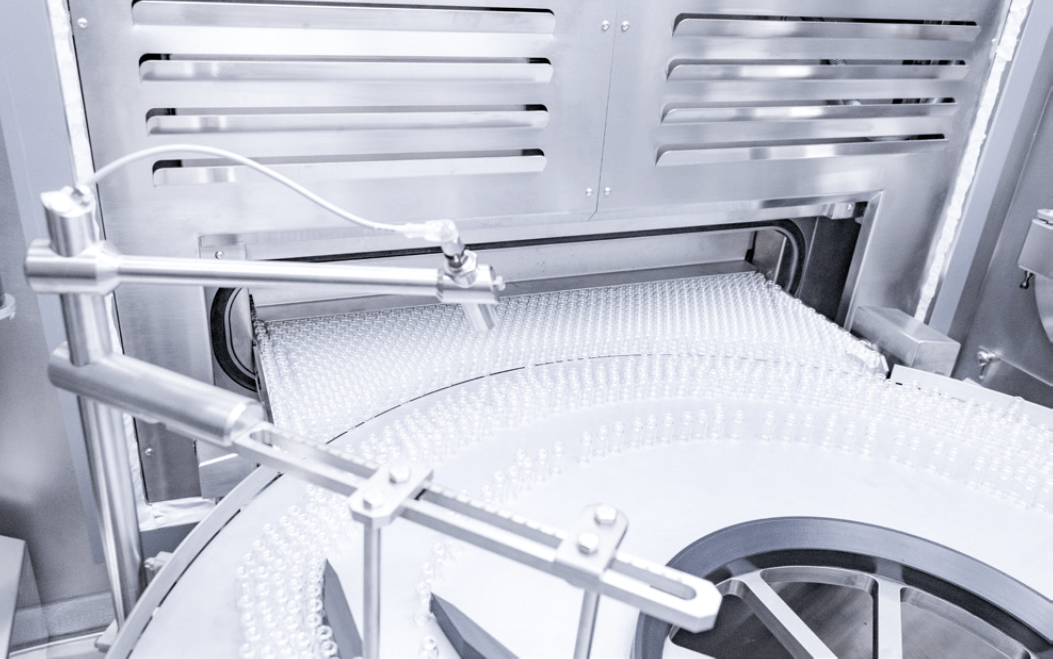
Washed and sterilized bulk vials coming out of a depyrogenation tunnel and accumulating on a rotary table prior to filling. Image courtesy of Optima Packaging Group GmbH. Used with permission.
Establishing a robust CCS requires more than selecting a vial and stopper. Elastomeric closures must withstand mechanical interaction with feeding systems, pick-and-place equipment, and plunger insertion mechanisms without compromising sealing performance. Surface damage, abrasion, or incompatibility with vent tubes can negatively affect integrity, particularly for laminated designs.
Barrier configuration also plays a role. Whether operating within a Restricted Access Barrier Systems (RABS) or isolator system, contamination control strategies must demonstrate effective risk management. Closed isolator systems can reduce human intervention and strengthen environmental control. RABS configurations remain viable when supported by appropriate procedural and engineering controls. In both cases, the container closure system must be compatible with the selected barrier approach.
Component format influences performance and flexibility. The industry continues to migrate toward ready‑to‑use formats for vials, syringes, and cartridges. Ready-to-use (RTU) components reduce washing and sterilization requirements, lower contamination risk, and support flexible manufacturing models. Nested configurations further affect transport mechanisms, closure introduction, and line design.
Plunger placement strategy is another critical consideration. Vacuum-assisted insertion, vent tube selection, and headspace modeling influence residual bubble size and internal pressure equilibrium. These variables must be evaluated to avoid contaminant ingress or unintended product migration.
West approaches these considerations holistically, partnering with customers to align integrity, machinability, and lifecycle performance from early development through commercial production.
If you are evaluating or refining your CCS, our technical teams are ready to support your assessment. Click here to Contact Us.


 English
 Chinese