Robotics and AI in Pharma: Driving the Next Wave of Innovation
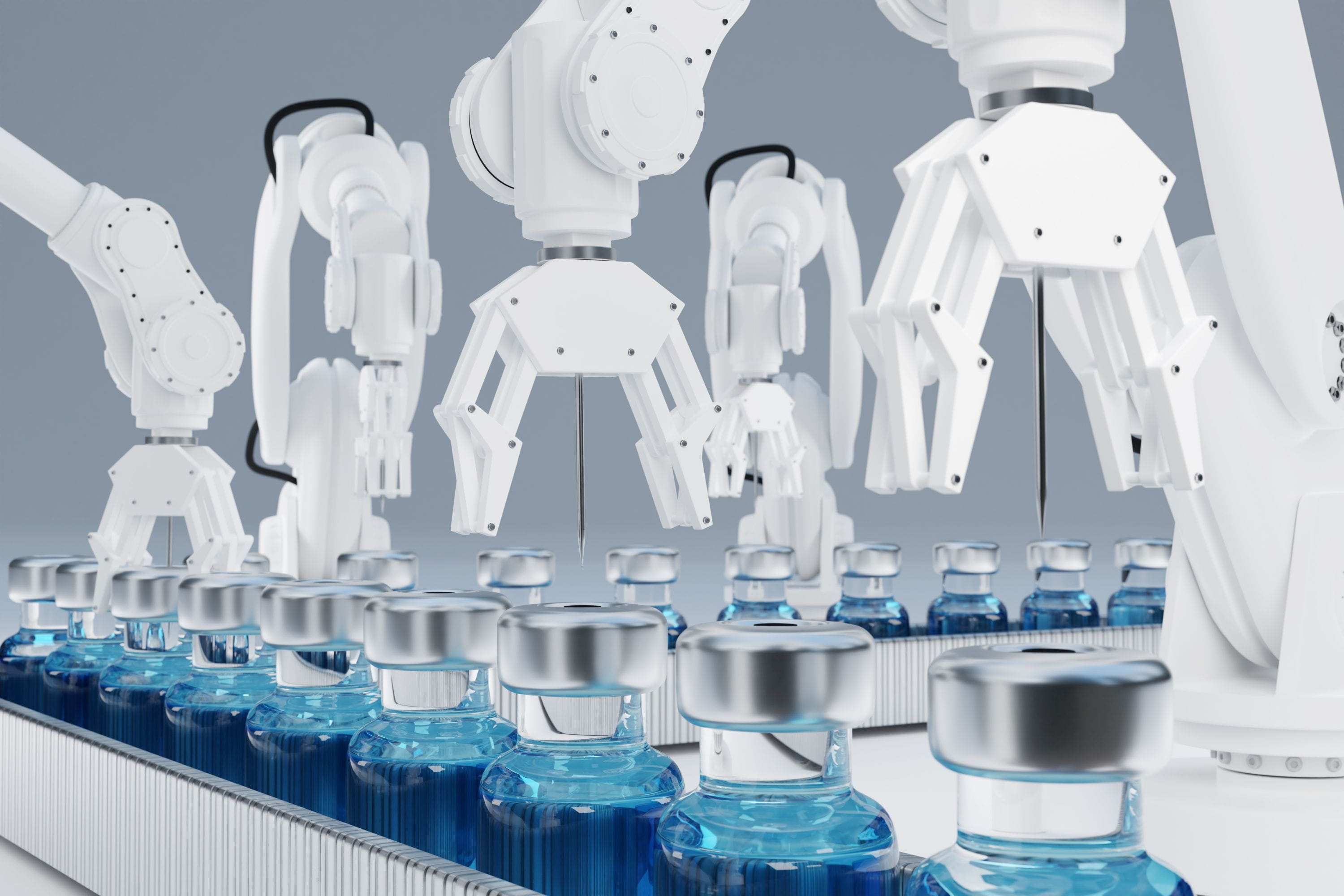
Pharmaceutical manufacturing is standing at the edge of a technological revolution. For decades, the industry relied on cam-driven systems, and more recently servo-driven mechanisms, to replicate basic human movements. Today, robotics and artificial intelligence (AI) are rewriting the rules of fill-finish operations, ushering in an era of precision, sterility, and adaptability.
As Simon Côté, Director, Technical Product development at West explained during a recent panel discussion:
“Robotics are not really a totally new thing… but what makes the advancements today exciting is the ability of these robotics to have multiple axes to move in multiple directions—even in one single stroke.”
This evolution isn’t just about movement—it’s about intelligence. Modern robotics integrate vision systems, enabling machines to identify, react, and make decisions in real time. These capabilities reduce human intervention, decrease the need for glove ports, minimize contamination risk, and align with stringent regulatory expectations around contamination control.
The Regulatory Imperative
The push toward automation is not optional—it’s driven by compliance and patient safety. Contamination control guidelines, particularly the revised EU GMP Annex 1 guideline, emphasize reducing glove ports and human contact in aseptic operations, which are historically high-risk contamination points. Robotics offer part of the solution:
“There is a desire and need to reduce the number of glove ports… now you’re replacing humans with robotics that can almost act and think like a human.”
This shift reflects a broader industry trend: engineered controls are replacing procedural controls. Regulators want contamination risk mitigated through technology, not just human behavior.
Challenges on the Road to Adoption
Despite the promise AI and robotics offer, adoption is gradual. Existing lines weren’t designed for advanced robotics, making retrofits costly and complex. Simon put it bluntly:
“These lines… they’re not designed with the real estate for robotics. There’s just no place for it.”
As a result, most implementations will occur on new filling lines, particularly for high-value, low-volume products like ATMPs (Advanced Therapy Medicinal Products). These molecules are hypersensitive and expensive, making precision and sterility non-negotiable. Robotics thrive in this environment, where every intervention matters.
AI: From Inspection to Intelligence
AI has long supported automated inspection, but its role is expanding rapidly. Future systems will enable real-time feedback loops, preventing defects before they occur. Simon captured the pace of change:
“AI is accelerating at a rate that I’m not even ready for… technologies in pharma are going to accelerate pretty rapidly.”
Imagine a scenario where a vision system detects a misaligned stopper and triggers an immediate robotic correction upstream—without human intervention. This is the future: a closed-loop system that virtually eliminates waste and contamination.
The Workforce Transformation
One of the most common concerns whenever automation and AI enter the conversation is whether automation is and will eliminate jobs. The fear is usually whether “robots will replace humans” but the reality is more nuanced, as automation changes roles, not just removes them. Companies need talent with expertise in robotics, vision systems, and computer science. As Simon noted:
“It’s just going to change the landscape of the workforce….companies are going to need computer scientists, engineers and people with unique skill sets that are often atypical of fill-finish operations.”
This shift represents both a challenge and an opportunity. Upskilling programs and strategic hiring will be essential as companies build teams capable of managing advanced systems.
Cost vs. Compliance
Upfront costs for robotics and AI are significant, but long-term benefits—reduced deviations, improved sterility, and minimized product loss—make the investment worthwhile. For many, the decision isn’t purely financial; it’s about patient safety and regulatory compliance:
“Even if it’s cost prohibitive, it still has to be done because we’re trying to improve safety of patients.”
Studies on isolators versus RABS show that while isolators require higher capital investment, they deliver cost efficiencies over time through fewer deviations and reduced manual interventions. Robotics are expected to follow a similar trajectory.
The Road Ahead
Pharma is on the brink of a major transformation. Technologies that once seemed futuristic are becoming standard, and the pace of change will only accelerate. For suppliers like West, this means aligning packaging and component designs with robotic capabilities nesting, sleeveless port bags, and configurations that enable seamless integration. Collaboration between OEMs ,, drug manufacturers, and component suppliers will be critical to success.
5 Key Takeaways
- Robotics and AI are not optional they’re essential for improved compliance and patient safety.
- Adoption will start with new lines for high-value, low-volume products like ATMPs.
- AI-driven vision systems will enable real-time corrective actions, reducing waste.
- Workforce skills must evolve computer science and automation expertise are in demand.
- Cost concerns will diminish as long-term efficiencies and regulatory mandates take precedence.
Bottom line:
Robotics and AI aren’t just trends—they’re catalysts for a safer, smarter, and more efficient pharmaceutical industry. The question isn’t if these technologies will dominate—it’s how fast we can adapt.


 English
 Chinese