Design Controls Process for Combination Products
The previous post in this series explored the mechanical engineering phase of novel device development, highlighting how the West team applies a data-driven, risk-based approach to ensure each device is not only safe and functional, but also engineered to meet the demands of global-scale manufacturing.
In this installment, we take a deeper look at Design Controls – a structured, documented development process to ensure that products combining a drug and device are safe, effective, and compliant with regulatory requirements.
At West, our engineers working on design and development of drug delivery devices, operate under strict ISO 13485 certified quality system and FDA 21 CFR 820.30 requirements, to ensure every engineering decision is documented, traceable, and audit-ready.
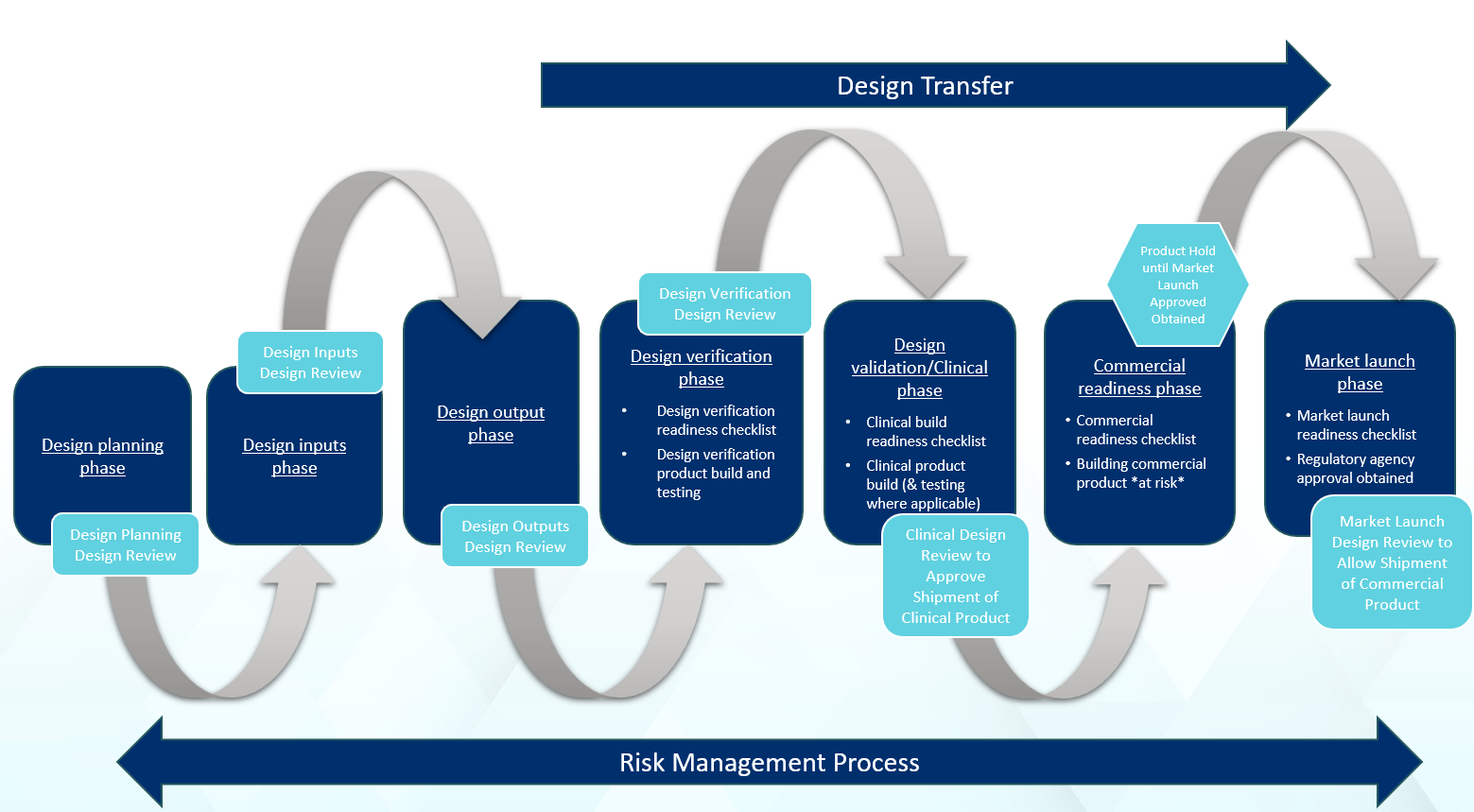
The core elements of Design Controls are outlined below:
1. Design & Development Planning (DDP)
- Project Roadmap Creation: Defining technical responsibilities, resource requirements, and the phase-gate activities for the entire development lifecycle.
- Dynamic Plan Management: Maintaining and updating the Design and Development Plan to reflect project evolution and regulatory shifts.
2. Design Input Translation
- Requirement Engineering: Converting qualitative "User Needs" into measurable, testable technical requirements (e.g., transforming "portable" into specific weight and dimension limits).
- Traceability Matrix Setup: Establishing the foundational links between clinical needs and engineering specifications.
3. Design Output Generation
- Technical Documentation & Blueprints: Developing 3D CAD models, circuit diagrams, and software code as verifiable design results.
- Manufacturing Specification Authoring: Creating clear assembly and testing instructions that allow for direct verification against inputs.
4. Formal Design Reviews
- Milestone Evaluation: Facilitating formal reviews at critical stages to ensure safety, performance, and requirement alignment.
- Independent Reviewer Coordination: Providing objective, independent oversight to meet FDA Quality System Regulation requirements.
5. Design Verification (DV)
- Bench Testing & Technical Evidence: Executing rigorous tests to prove the physical device meets its technical specifications (e.g., drop testing, electrical safety, or accuracy checks).
- Protocol & Report Authoring: Drafting the formal documentation required to prove the device was "built right."
6. Design Validation (VAL)
- User-Centric Performance Testing: Managing trials in actual or simulated environments with representative users to ensure clinical benefit.
- Clinical Goal Verification: Proving the device satisfies the original User Needs—confirming you "built the right device."
7. Design Transfer & Industrialisation
- Production Hand-off Management: Ensuring the final design is correctly translated into manufacturing specifications for consistent mass production.
- Device Master Record (DMR) Compilation: Assembling the definitive "recipe" for manufacturing, including drawings and labels.
8. Design Change Control
- Modification Risk Assessment: Formally documenting and reviewing any design changes to ensure they do not introduce new safety risks.
- Regression Testing & Re-verification: Managing the impact of design updates on existing validated processes.
9. Design History File (DHF) Compilation
- Central Audit Readiness: Building and maintaining the comprehensive repository of all design records for FDA or ISO 13485 inspections.
- Regulatory Submission Support: Preparing the DHF for seamless integration into 510(k), PMA, or Technical File submissions.
The next blog post in this series will walk through Test and Verification, which is a structured, lab-based, and requirement-driven approach to ensure that the device outputs match technical specifications.


 English
 Chinese