The West Blog

Blogs

Categories

Select a sub-category to view results

Icon
Films and Coatings
vail 4ml
Pharmaceutical Packaging Components
Icon
Prefillable Systems
Icon
Self Injection Devices
Icon
Vial Containment Solutions
Icon
Washing and Sterilization
Icon
Reconstitution and Transfer Devices

Select a sub-category to view results

Icon
Analytical Lab Services
Icon
Contract Manufacturing
Icon
Fill-Finish
Icon
Regulatory Support

Select a sub-category to view results

Icon
Cell and Gene Therapy Packaging
Icon
Drug Development Process
Icon
Regulatory Challenges
Icon
Transitioning to Combination Products

Select a sub-category to view results

Icon
Corporate Development
Icon
ESG/Sustainability
Icon
One West Team (Employee Culture)
Icon
Our Culture of Giving (Philanthropy)
Icon
Research and Development

Previous Blogs

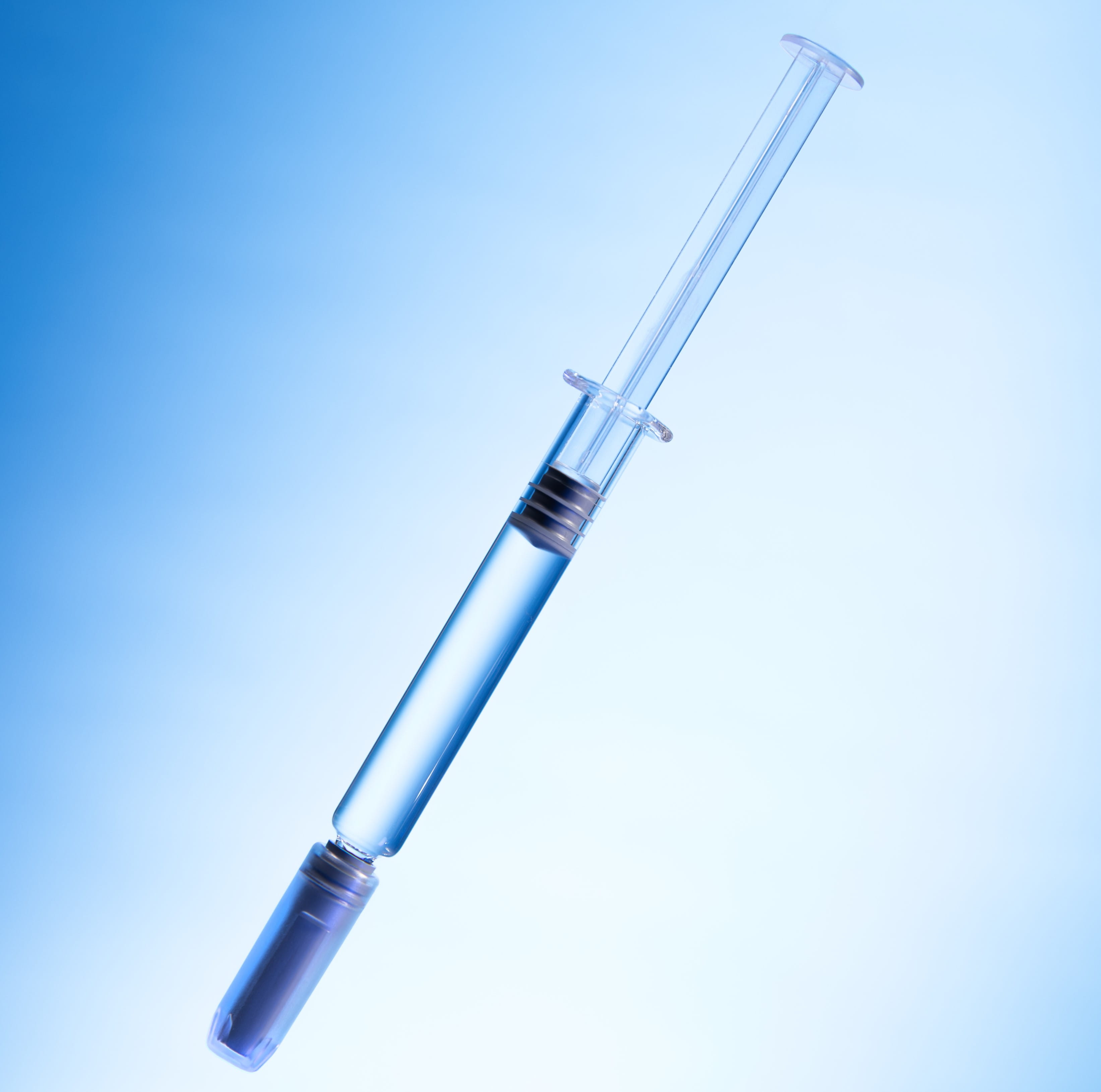
Prefillable glass syringe barrels and plungers arranged on a blue surface, illustrating a prefillable syringe system.

By Bettine Boltres

April 28, 2026

While the drug development team is in the process of working on the last details to optimize the drug, that is where the work for the packaging engineers really starts. A cumbersome journey of scouting and evaluation of all possible packaging options out there, followed by extensive testing and complex interpretation of the results. This process can take many months without assurance of comprehensively addressing all factors. Especially in the space of prefilled syringes which are regulated as combination products, the requirements are expansive and often ambiguous. This presentation introduces a groundbreaking innovation: An advancement in the prefillable syringe market, uniquely integrating the syringe barrel, plunger, and needle shield/tip cap into a fully harmonized, verified system from a single supplier. It will demonstrate how this system enables especially emerging biotechnology companies to significantly save time and resources, accelerating the pathway to clinical fill.

Gloved hand drawing liquid into a syringe from a vial fitted with a medical adapter.

By Katie Espenshade

April 22, 2026

In the world of medical devices, ensuring the safety and compatibility of equipment is fundamental to patient care. Among the most significant developments in this area is the replacement of ISO 594 by ISO 80369, a series of standards redefining how medical connectors are designed and validated.

Parenteral packaging components including glass vials, prefillable syringes, cartridges, stoppers, and seals

By Sonia Adamidis

April 16, 2026

In parenteral drug development, packaging is often discussed as a format decision based on containment in vials, prefillable syringes, or cartridges. In reality, packaging choices involve far more than the container itself. Packaging influences product stability, manufacturing complexity, patient experience, and long-term lifecycle performance.
For teams entering the parenteral packaging space, the goal should not be to simply identify a “best” option. However, the goal should be to select the format that best aligns with the drug product’s characteristics, the intended patient population, and the development strategy.

Group photo of students and volunteers holding donated laptops during the 2026 Bangalore laptop donation drive.

By Eecho Wang

April 14, 2026

Continuing our commitment to strengthening the communities where we live and work, the Bangalore GTC team recently completed another successful technology donation drive, providing refurbished laptops and other devices to schools with limited access to technology. This initiative reflects our dedication to sustainable development and demonstrates how our people can use what they do best to make a meaningful difference in empowering future generations.

Sealed glass vials containing injectable drug solution.

By Victoria Morgan

April 07, 2026

Controlling particulate matter in injectable drug products has long been a cornerstone of patient safety. While large visible particles often gain public attention through recalls, subvisible particulate contamination the particles you can’t see pose an equally serious risk. These particles can compromise product quality, trigger inflammation or immune reactions, and jeopardize the safety of sensitive patient populations.

West Pharmaceutical scientist in cleanroom attire using a pipette at a laboratory workstation.

By John Rech

March 31, 2026

Silicone oil is commonly applied to components involved in primary drug containment, primarily serving as a lubricant for elastomeric parts. For instance, silicone oil is commonly applied to rubber stoppers and plungers to facilitate machinability throughout the fill-finish process. Similarly, it is used on the inner surface of syringes to enable smooth and controlled movement of the piston during injection. However, silicone oil introduced into the primary container may migrate into the drug product, where it can appear as sub-visible particulate matter—an important critical quality attribute (CQA) of the final drug product.