How Self-Injectors are Putting Control Back into Patients’ Hands: Why Auto Selecting An Autoinjector Isn’t Always the Best Option
Injectable medicines are taken by millions of people day in and day out to treat a variety of chronic illnesses such as arthritis, Crohn’s disease, diabetes, osteoporosis, multiple sclerosis, and others. Oftentimes, these treatments may involve patients self-injecting, which can be far more convenient than having to visit a doctor’s office, but can also be intimidating.1 For patients who need to self-inject, anxiety around the process is a reality for 25% of adults and for 63% of younger people. This anxiety is not only unpleasant, it can also lead to a lack of adherence with prescribed medications, which can result in poor outcomes.2
To add to these challenges, patients who need to self-inject to manage a chronic condition may also be facing symptoms that make doing so difficult. One example is multiple sclerosis (MS), a chronic neurological disorder that usually begins in young adults, between ages 20 and 40. MS affects people differently. A small number of people with MS will have mild symptoms with little disability, but others will experience worsening symptoms that will lead to increased disability over time, including muscle weakness, stiffness, and spasms that may be severe enough to affect walking or standing.3 Imagine what it must be like for patients who are managing symptoms as tough as these while dealing with a fear of self-injecting the medicine that they need in order to manage these very symptoms?
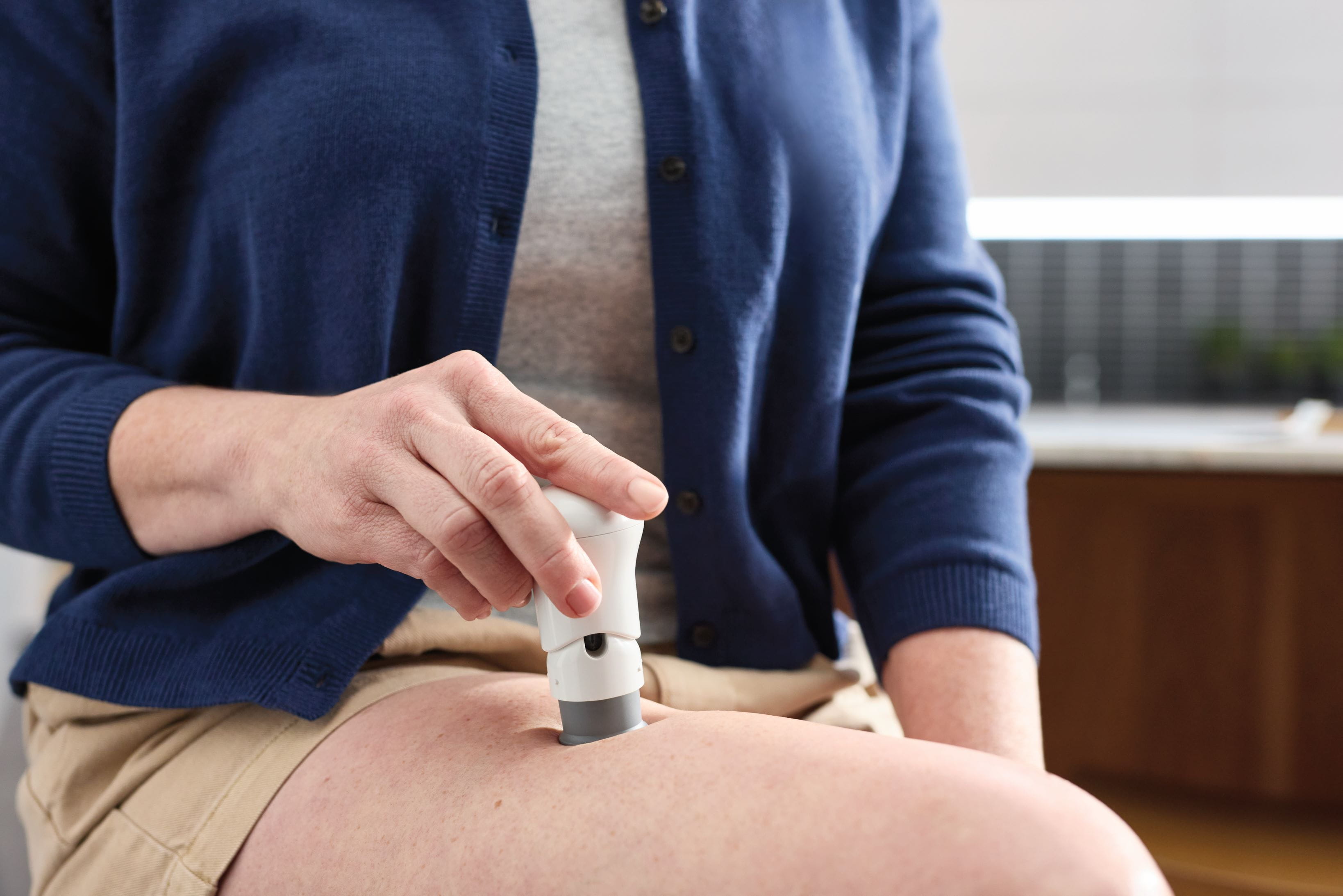
The challenge for pharmaceutical companies who are developing these new self-injected medications is to find a way to address these fears and meet patients where they are on their treatment journeys. Not all injections need to be scary. In fact, with devices like the SelfDose® patient-controlled injector, patients can take control back into their own hands and ease their anxiety thanks to its patient-friendly design.
Many pharmaceutical manufacturers use autoinjectors to deliver injectable medicines to patients. However, to work, an autoinjector includes a spring-loaded syringe, which can make it hard for patients to control the speed and pressure – creating a level of fear and anxiety.4 Unlike an autoinjector, the SelfDose injector is the only self-administered injection device that has been intentionally designed for patient control, comfort, and confidence. It is simple for any patient to press down with their palm—even if they have visual impairments or dexterity issues. There is no thumb action needed or buttons to press. And the wider surface area at the base makes it easier to stabilize against the skin. Instead of bracing for impact, patients can go as fast or as slow as they would like. Patients have reported that being able to inject a medication very slowly lessens the pain, bruising, and swelling.3 This is important for a number of patients segments: people who fear needles, parents administering for children, and aging people with degenerative conditions.
In a recent survey published in Advances in Therapy that gathered responses from patients who used the SelfDose injector, 91% (49/54) of participants reported that they were satisfied or very satisfied with the injection; 89% (48/54) felt very or extremely confident injecting; and 91% (49/54) found it to be convenient or very convenient. Seventy-six percent (41/54) felt that it was very or extremely easy to self-inject with this device and 87% (47/54) perceived that they were likely or very likely to maintain persistence and compliance with this device.5 These results demonstrate that the SelfDose injector can lead to high levels of satisfaction and confidence when self-injection is required.
As pharmaceutical research moves forward and companies are increasingly working to deliver injectable medicines to patients in a home setting, considering the selection of an easy-to-use self-injector like the SelfDose injector could help drive patient satisfaction and, importantly, adherence and outcomes. Learn more about the SelfDose® patient-controlled injector.
West’s SelfDose® patient-controlled injector is not independently cleared or approved by any Regulatory Body for general healthcare professional or patient use, nor is it available for general commercial purchase. Its distribution and use are subject to applicable regulatory requirements for clinical investigation, and for marketing authorization, as used in combination with a specific drug or biological product. Each component of a combination product is subject to the requirements established by the Regulatory Body for that component (drug, biologic or device). The regulatory process can be more complicated for combination products including an evaluation of the product characteristics, delivery system and its functionality, intended users and use environment(s), as well as the potential for undesirable interactions between the drug or biologic and the delivery system. As a result, we note that the SelfDose® patient-controlled injector's compatibility with any particular drug or biologic must be confirmed, on a case-by-case basis in a manner sufficient to meet Regulatory Body requirements. The assembled appearance of the SelfDose® patient-controlled injector is for demonstrative purposes only. The SelfDose® patient-controlled injector is intended to be distributed as an integrated device and is provided disassembled for assembly with, or around, the specific drug or biologic. Products are shown for INFORMATION purposes only. Important product and safety information and warnings available at: SelfDose® patient-controlled injector.
West and the diamond logo and SelfDose are registered trademarks of West Pharmaceutical Services, Inc. in the United States and other jurisdictions.
Copyright © 2026. West Pharmaceutical Services, Inc.


 English
 Chinese