Don’t Auto-select Your Auto Injector: How Patient Controlled Devices Can Address The Patient Challenges of Self-Injection
As the burden of chronic and autoimmune diseases rises, there are many promising new therapies under research on the horizon to address these diseases. Many of these novel therapies require the patient to self-inject, which can sometimes present challenges, including discomfort, anxiety, inconvenience, and a higher likelihood of not following their treatment as prescribed.[1]
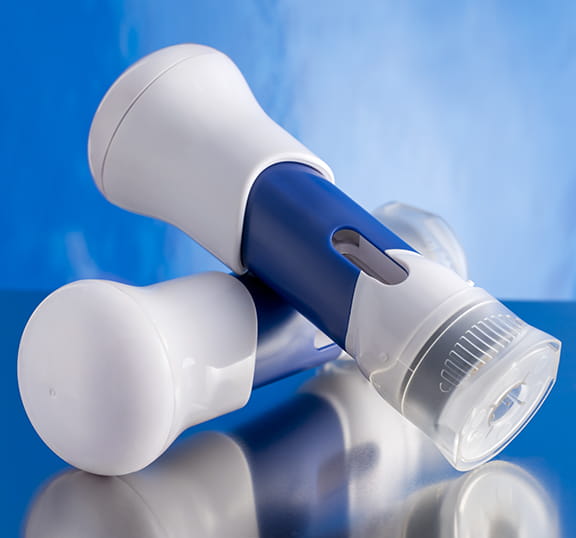
Pharmaceutical companies who are developing these new treatments must decide how best to deliver these medicines to patients, ensuring their selected devices are easy to use as well as efficient and effective in delivering their medicines successfully. While autoinjectors can be an obvious choice, choosing a patient-controlled device, like the SelfDose® patient-controlled injector, could address these patient challenges and, in doing so, differentiate a product in the market.
One of the most significant challenges for patients is being able to self-inject easily, which requires hand strength. Hand function declines noticeably with age, especially after 65, due to degenerative changes in the muscles, joints, nerves, and blood vessels. These natural changes, combined with common age‑related conditions like osteoporosis, arthritis, and Parkinson’s disease, further contribute to reduced strength, coordination, and overall hand ability in older adults.[2]. In fact, the very conditions that are causing poor hand strength may also be the reason a patient needs to self-inject in the first place, as many of these same conditions can be treated with self-injected therapies.
As manufacturers determine what may be the best device to deliver an injectable medicine to a patient in a home setting, they should consider that many aging patients may not have the full functioning of their hands and, therefore, a device that is ergonomically designed for optimal patient administration like the SelfDose injector may be the best option.
In a study published in the American Medical Journal, the benefits and challenges associated with self-injecting a treatment for rheumatoid arthritis delivered in a SelfDose injector were examined. The authors concluded that patients benefited from “the ease and simplicity of use” of the device, which enabled “confidence in the device and good adherence.” The authors also reported that the design of the SelfDose injector “enabled patients with poorer hand grip to hold the device without difficulty and administer the injection effectively with the base of their hands.” These findings were consistent with the majority of patients in the study reporting satisfaction with the device.[3]
The conclusions of this study are consistent with the extensive human factor data that we have collected on the SelfDose injector, which is designed differently than an autoinjector. The biggest difference is that it is not dependent on the spring-driven force of an autoinjector. Patients manually control the SelfDose injector by simply pressing it down with their palm. This means that as patients age and symptoms progress, they can still comfortably self-administer their medication.
For pharmaceutical companies looking at devices that will help them address patient challenges that exist for an aging population, the SelfDose injector is a device they should consider. The device can handle a variety of volumes, viscosities, and prefilled syringe types, and it is an off-the-shelf option that can be customized easily to a variety of manufacturing environments. Self injection does not always need to be via an autoinjector, especially when the SelfDose injector offers so many patient-friendly design options that could set a product apart in the market and lead to patient satisfaction with treatment. Visit the SelfDose injector page for more information.
West’s SelfDose® patient-controlled injector is not independently cleared or approved by any Regulatory Body for general healthcare professional or patient use, nor is it available for general commercial purchase. Its distribution and use are subject to applicable regulatory requirements for clinical investigation, and for marketing authorization, as used in combination with a specific drug or biological product. Each component of a combination product is subject to the requirements established by the Regulatory Body for that component (drug, biologic or device). The regulatory process can be more complicated for combination products including an evaluation of the product characteristics, delivery system and its functionality, intended users and use environment(s), as well as the potential for undesirable interactions between the drug or biologic and the delivery system. As a result, we note that the SelfDose® patient-controlled injector's compatibility with any particular drug or biologic must be confirmed, on a case-by-case basis in a manner sufficient to meet Regulatory Body requirements. The assembled appearance of the SelfDose® patient-controlled injector is for demonstrative purposes only. The SelfDose® patient-controlled injector is intended to be distributed as an integrated device and is provided disassembled for assembly with, or around, the specific drug or biologic. Products are shown for INFORMATION purposes only. Important product and safety information and warnings available at: https://www.westpharma.com/products/self-injection-platforms/selfdose.
West and the diamond logo and SelfDose are registered trademarks of West Pharmaceutical Services, Inc. in the United States and other jurisdictions.
Copyright © 2026. West Pharmaceutical Services, Inc.[1] https://www.biospace.com/press-releases/autoinjectors-are-redefining-drug-delivery-and-the-market-is-exploding
[2] https://www.physio-pedia.com/Effects_of_Ageing_on_Hand_Function
[3] https://www.emjreviews.com/en-us/amj/rheumatology/symposium/perspectives-of-the-methofill-methotrexate-pre-filled-injector-device-insights-from-a-rheumatology-nurse-consultant-and-results-from-a-real-life-patient-experience-survey-j190321/


 English
 Chinese